.svg)
.svg)
.svg)
.svg)
ADHD & Addiction Treatment
Individualized, evidence-based care in a private Hollywood Hills setting. Same clinical team from intake through aftercare.
The Connection Between ADHD and Addiction
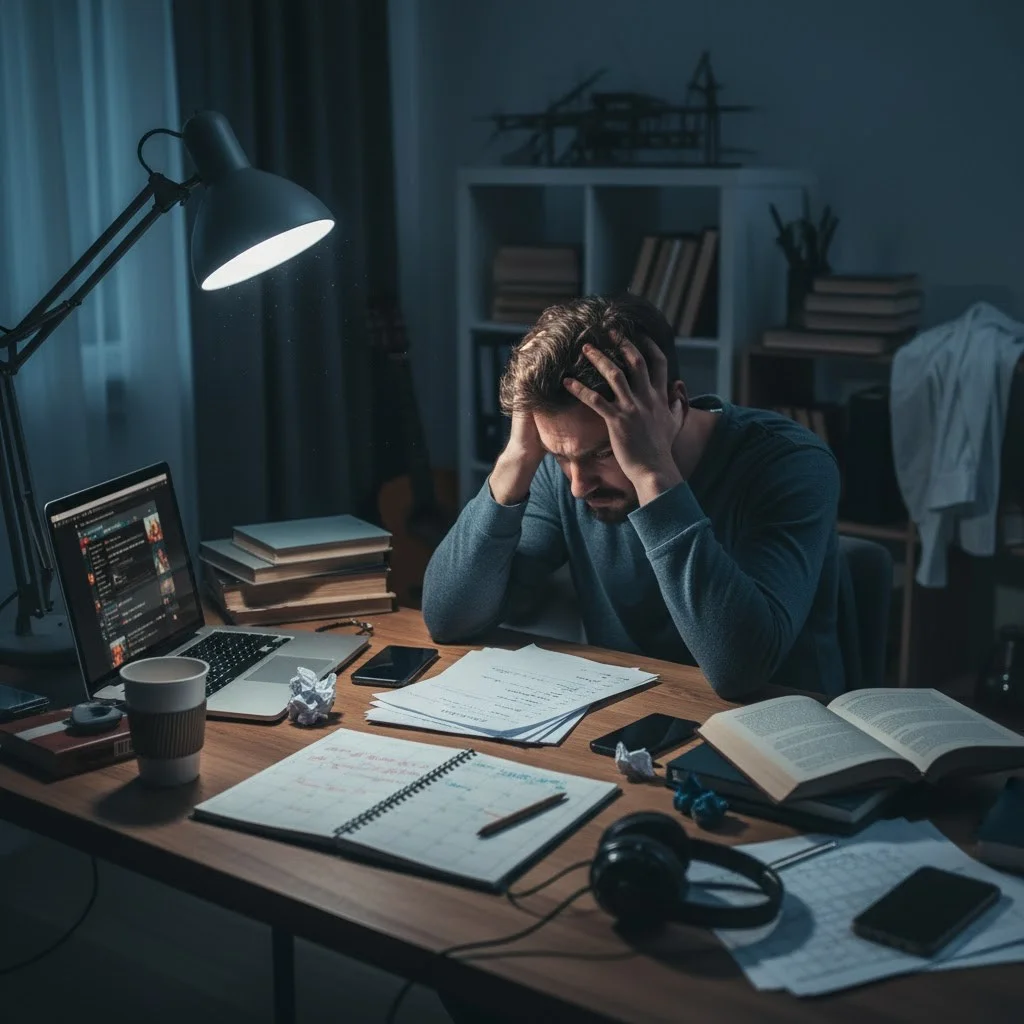
ADHD and substance use disorders are among the most commonly co-occurring conditions in clinical practice. Each condition tends to worsen the other — substances are frequently used to manage ADHD symptoms, while sustained substance use worsens the underlying condition and makes recovery harder. ADHD also commonly co-occurs with depression and anxiety disorders — conditions that share impaired regulation and often emerge together, requiring a coordinated clinical response.
Treating only the addiction without addressing ADHD leaves the most powerful driver of substance use unaddressed. This is why integrated dual diagnosis treatment — treating both conditions simultaneously within a unified clinical plan — produces significantly better outcomes than treating either in isolation.
Symptoms and Presentation
Inattention
Difficulty sustaining focus, disorganization, and forgetfulness that often lead to self-medication with stimulants or sedatives.
Hyperactivity
Restlessness and impulsivity that drive risk-taking behaviors, including substance experimentation and compulsive use.
Impulsivity
Difficulty delaying gratification and poor impulse control — core ADHD traits that significantly increase addiction vulnerability.
Stimulant medications for ADHD carry abuse potential and require careful consideration. Non-stimulant options are typically preferred in early recovery.
Start your recovery
Our admissions team is available around the clock — confidentially, and without pressure.
How We Treat ADHD and Addiction
Non-Stimulant Medication
Atomoxetine, guanfacine, and bupropion that improve focus and impulse control without the abuse potential of stimulant medications.
Executive Skills Training
Structured coaching in organization, time management, and decision-making that addresses the cognitive deficits driving both ADHD and addiction.
Impulse Control Therapy
Behavioral interventions that build the pause between impulse and action — the critical skill for managing both conditions simultaneously.
"ADHD isn't a flaw — it's a different neurology. When we work with it, not against it, recovery becomes sustainable."
Addictions We Treat Alongside This
Four Pillars of ADHD and Addiction Care

Non-Stimulant Medication
Atomoxetine, guanfacine, and bupropion improve focus and impulse control without the abuse potential of stimulant medications. Our psychiatrists carefully balance ADHD symptom management with the demands of early addiction recovery.
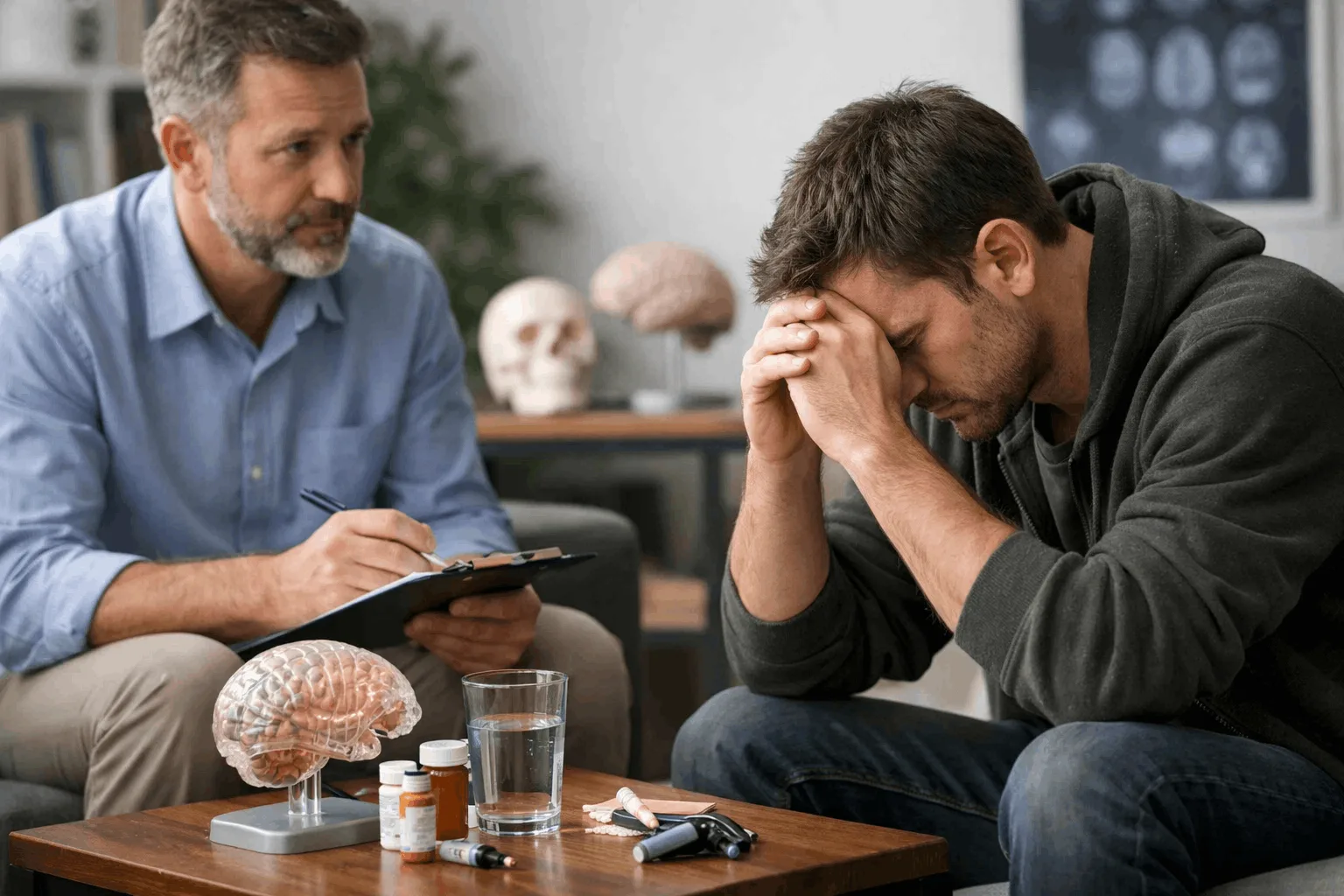
Executive Skills Training
Structured coaching in organization, time management, and decision-making addresses the cognitive deficits that drive both ADHD and addiction. Individual and group sessions provide both skills and accountability.

Integrated Dual Diagnosis Care
ADHD isn't a flaw — it's a different neurology. When we work with it, not against it, recovery becomes sustainable. Our unified plan treats ADHD and substance use simultaneously within a single clinical framework.

Impulse Control & Aftercare
Behavioral interventions that build the pause between impulse and action are a core skill for both conditions. Our step-down PHP/IOP programming and alumni community reinforce these skills long after residential discharge.

Start Your Recovery from ADHD and Addiction Today
You don't have to face ADHD and addiction alone. Our team of compassionate clinicians is available around the clock — confidentially, and without pressure — to guide you toward lasting recovery.
FAQ about ADHD and Addiction
Is ADHD medication safe to take in recovery?
This depends on the specific medication and recovery stability. Non-stimulant medications are appropriate at any stage. Stimulants require more careful clinical judgment.
Did ADHD cause my addiction?
ADHD is a significant risk factor for addiction — not a cause. Understanding this connection is clinically useful, but it is not a deterministic explanation.
What is the connection between ADHD and self-medication with substances?
People with untreated or undertreated ADHD may use substances to modulate symptoms they find unmanageable: stimulants (cocaine, meth, prescription amphetamines) to increase focus and energy; cannabis, alcohol, or opioids to reduce restlessness, racing thoughts, or emotional dysregulation. This self-medication dynamic is one of the primary drivers of substance use disorder in people with ADHD — and it is why treating the ADHD alongside the addiction, rather than sequentially, produces better outcomes.
Does insurance cover ADHD and addiction treatment at Bliss Recovery?
Yes. We're in-network with HealthSmart, MultiPlan, PMCS, and TriWest, and most major commercial PPO plans cover integrated dual-diagnosis treatment for ADHD and co-occurring substance use disorder under the Mental Health Parity and Addiction Equity Act. Coverage depends on your specific plan and level of care. Our admissions team verifies your benefits in detail before you commit to anything.
How long does integrated ADHD and addiction treatment take?
Most clients begin with medically supervised detox (5 to 10 days), followed by residential treatment of an individualized length. Identifying the appropriate ADHD medication protocol — navigating non-stimulant options versus stimulant options in the context of addiction recovery — can take time to calibrate carefully. PHP and IOP step-down programming typically add another 4 to 12 weeks.
What does ADHD and addiction treatment look like at Bliss Recovery?
Treatment begins with a comprehensive psychiatric assessment covering ADHD symptom history, substance use, and any other co-occurring conditions. Our clinical team builds a unified plan: psychiatric medication management (non-stimulant first, with careful evaluation if stimulants are clinically warranted), CBT adapted for ADHD (executive function, impulse control, and time management skills), and motivational approaches that account for ADHD-related engagement challenges.
Is residential treatment necessary for ADHD and addiction, or can I do outpatient?
For clients with significant ADHD alongside active substance use disorder, residential treatment offers the structure and consistency that ADHD makes difficult to create independently. The immersive environment — consistent schedule, minimal environmental distractions, and daily therapeutic contact — supports both the addiction recovery work and the early establishment of executive function skills. PHP and IOP are appropriate next steps after residential stabilization.
Related Conditions & Programs
Mental health and addiction treated together.
Co-occurring disorders reinforce each other. We treat both simultaneously — with psychiatric support, therapy, and medication management.