.svg)
.svg)
.svg)
.svg)

Alcohol Addiction Treatment
Individualized, evidence-based care in a private Hollywood Hills setting. Same clinical team from intake through aftercare.

Alcohol Addiction Doesn't Have to Define Your Life.
Our evidence-based alcohol addiction treatment combines medically supervised detox, integrated dual-diagnosis care, and a private Hollywood Hills setting designed for lasting recovery. Our admissions team is ready when you are — call (323) 798-4411 or verify your insurance online.
Understanding Alcohol Use Disorder
Alcohol addiction, clinically known as Alcohol Use Disorder (AUD), is a chronic and progressive condition that affects brain chemistry, judgment, and physical health. It is not a matter of willpower. Under the DSM-5-TR, clinicians diagnose AUD by counting how many of eleven specific behavioral and physical criteria have been present in the past twelve months — things like drinking more than intended, unsuccessful attempts to cut back, strong cravings, tolerance, and withdrawal when not drinking.
An estimated 29.5 million adults aged 12 and older meet the criteria for AUD in any given year in the United States. Only a fraction receive treatment. The good news: AUD is highly treatable, and most people who engage with evidence-based care recover or significantly improve. At Bliss Recovery, our clinical team assesses where each client falls on the spectrum, then designs a treatment plan around the right level of care and any co-occurring mental health conditions that need to be addressed.
| Severity | Criteria Met |
|---|---|
| Mild AUD | 2 to 3 of 11 |
| Moderate AUD | 4 to 5 of 11 |
| Severe AUD | 6 or more of 11 |
What the Research Shows
Prevalence & the Treatment Gap
Alcohol Use Disorder is among the most prevalent — and most undertreated — conditions in the United States. According to the National Institute on Alcohol Abuse and Alcoholism (NIAAA), an estimated 29.5 million people aged 12 and older met the diagnostic criteria for AUD in 2022. Yet the Substance Abuse and Mental Health Services Administration's (SAMHSA) National Survey on Drug Use and Health consistently finds that fewer than 7% of people with AUD receive treatment at a specialty facility in any given year. The gap between how many people need help and how many receive it remains one of the largest in American healthcare.
Evidence That Treatment Works
The treatment gap reflects barriers — stigma, cost concerns, and lack of awareness that effective help exists — not the absence of effective treatments. The clinical evidence base for AUD is substantial. NIAAA-funded longitudinal research found that approximately 36% of people with AUD achieve full remission within one year, and more than half achieve sustained remission within three years when they engage with evidence-based care. Medically supervised detox reduces the risk of life-threatening withdrawal complications, including seizures and delirium tremens, which occur in 5 to 15% of severe withdrawal cases left unmanaged. Cognitive Behavioral Therapy, Motivational Interviewing, and Medication-Assisted Treatment (naltrexone, acamprosate, disulfiram) each have substantial peer-reviewed evidence supporting their effectiveness for AUD.
Co-Occurring Conditions & Dual Diagnosis
Co-occurring mental health conditions significantly influence AUD outcomes. Research consistently shows that 40 to 50% of people with AUD also meet criteria for at least one other psychiatric diagnosis — most commonly depression, anxiety disorders, PTSD, and bipolar disorder. Integrated dual-diagnosis treatment, which addresses both conditions simultaneously within a single clinical plan, produces meaningfully better outcomes than treating each condition in sequence or in isolation. This is the model Bliss Recovery is built around.
Signs and Symptoms
Physical Signs
- Increased tolerance — needing more alcohol to feel the same effect
- Withdrawal symptoms when not drinking: shakiness, sweating, nausea, insomnia
- Liver inflammation, fatty liver, or early cirrhosis
- High blood pressure and elevated heart rate
- Memory blackouts and cognitive fog
- Unexplained weight changes and visible facial changes
- Frequent injuries, falls, or accidents
Behavioral and Psychological Signs
- Drinking more or longer than intended
- Unsuccessful attempts to cut back or quit
- Drinking secretly, hiding bottles, or lying about consumption
- Neglecting responsibilities at work, school, or home
- Giving up activities, hobbies, or relationships in favor of drinking
- Intense cravings or preoccupation with the next drink
- Anxiety, depression, or mood swings — especially when not drinking
- Self-medicating to manage stress, trauma, or sleep
- Feelings of guilt, shame, or hopelessness about drinking
Alcohol Withdrawal Timeline
For anyone who has been drinking heavily and consistently, stopping alcohol cold without medical supervision can be dangerous. Withdrawal can range from mild discomfort to seizures and delirium tremens (DTs) — a potentially fatal condition that occurs in 5 to 15% of severe withdrawal cases.
This is why our alcohol addiction treatment begins with medically supervised detox for clients who need it — 24-hour clinical monitoring, evidence-based withdrawal medications, and a calm private setting transform a frightening medical event into a manageable first step toward recovery.
| Stage | Time Since Last Drink | What to Expect |
|---|---|---|
| Stage 1 — Early | 6 to 12 hours | Anxiety, headache, insomnia, nausea, tremors, sweating, restlessness |
| Stage 2 — Moderate | 12 to 24 hours | Heightened anxiety, mild hallucinations (visual or auditory), elevated heart rate and blood pressure |
| Stage 3 — Peak | 24 to 72 hours | Seizure risk peaks, severe tremors, confusion, fever, profuse sweating, possible onset of delirium tremens |
| Stage 4 — Resolution | 72 hours to 7 days | Physical symptoms gradually subside; sleep and appetite slowly return; emotional symptoms persist |
| Post-Acute | Weeks to months | Lingering anxiety, low mood, sleep disturbance, cravings (post-acute withdrawal syndrome, or PAWS) |
What Does Research Say About Alcohol Addiction
Across the United States, millions of adults struggle with Alcohol Use Disorder (AUD), yet only a fraction seek the help they need. According to research published by the National Institute on Alcohol Abuse and Alcoholism (NIAAA), approximately 29.5 million Americans aged 12 and older met the criteria for AUD in the most recent national survey.
Long-term studies from the National Institutes of Health (NIH) have shown that alcohol addiction alters neural pathways associated with reward, stress, and self-control—making sustained recovery difficult without comprehensive treatment.
Extensive research from the World Health Organization (WHO) and Harvard T.H. Chan School of Public Health links excessive alcohol use to more than 200 health conditions, including liver cirrhosis, cardiovascular disease, and several types of cancer.
In California, rates of alcohol dependence continue to rise, underscoring the urgent need for evidence-based alcohol addiction treatment in Los Angeles.
At Bliss Recovery, our clinical team provides individualized, medically supervised care that addresses both the biological and psychological aspects of addiction—helping clients achieve lasting recovery in a private, luxury environment.
Treatment at Bliss Recovery
Clinical Assessment
Thorough evaluation covering substance use, mental health, medical history, and individual goals.
Medically Supervised Detox
Medically supervised alcohol detox is the clinical standard of care for anyone with physical dependence on alcohol. Our physicians prescribe evidence-based medications to reduce withdrawal symptoms and prevent complications, while our nursing team monitors vitals around the clock in a private residential setting.
Residential Treatment
Immersive live-in care in a private Hollywood Hills estate. Individual and group therapy, psychiatric care.
PHP & IOP Step-Down
Structured outpatient that maintains momentum as clients reintegrate into daily life.
Speak With Admissions
Our admissions team is available around the clock — confidentially, and without pressure. Call (323) 798-4411 or verify your insurance online in about five minutes.
Evidence-Based Therapies for Alcohol Addiction
There is no single therapy that works for every person with AUD. Our clinicians match each client with the modalities best suited to their history, their co-occurring conditions, and the way they process change.
Cognitive Behavioral Therapy (CBT)
Identifies the thoughts and triggers that drive drinking and teaches concrete coping strategies. One of the most-studied therapies for AUD.
Motivational Interviewing
A collaborative approach that builds and strengthens internal motivation to change — particularly effective in the early stages of recovery.
Dialectical Behavior Therapy (DBT)
Combines mindfulness with distress tolerance and emotion regulation skills, useful for clients whose drinking is tied to emotional dysregulation.
Trauma-Informed Therapy & EMDR
For clients whose alcohol use is rooted in unresolved trauma. EMDR and Brainspotting address trauma memories directly.
Family & Couples Therapy
Repairs the relational damage of addiction and builds a support system that holds up after treatment ends.
Relapse Prevention
Dedicated relapse prevention work prepares each client for the high-risk moments they'll inevitably face after discharge.

Holistic and Wellness Modalities
Evidence-based therapy is the clinical core of recovery. Holistic care is what makes the work sustainable. Clients explore clinical breathwork and neuro-meditation, art therapy, guided canyon hikes, and a gourmet nutrition program prepared by an on-site executive chef — a wellness program built for sustained, real-world recovery.
Medications Used in Alcohol Addiction Treatment
Depending on the severity of your alcohol use, your clinical history, and your withdrawal symptoms, our physicians may incorporate medication into your treatment plan. Every prescription is individualized — what's right for one client is rarely right for another.
Detox-Phase Medications
During medically supervised detox, our team may use medications to manage withdrawal symptoms safely. These can include benzodiazepines such as diazepam for seizure prevention and anxiety, phenobarbital for severe withdrawal, clonidine to reduce blood pressure spikes and autonomic symptoms, methocarbamol for muscle relaxation, hydroxyzine for anxiety, and trazodone to support sleep during early recovery.
Long-Term Medication-Assisted Treatment (MAT)
The FDA has approved three medications specifically for ongoing alcohol use disorder treatment after detox:
Naltrexone
Blocks the brain's reward response to alcohol and reduces cravings. Available as a daily oral medication or a monthly injection.
Acamprosate
Works on multiple brain systems to reduce post-detox cravings and support sustained abstinence.
Disulfiram
Causes unpleasant physical symptoms when alcohol is consumed — useful for clients who benefit from a strong external deterrent.
These medications work best when combined with therapy, not as a replacement for it. Your physician at Bliss will discuss whether MAT is appropriate for your situation.

Treating Alcohol Addiction and Mental Health Together
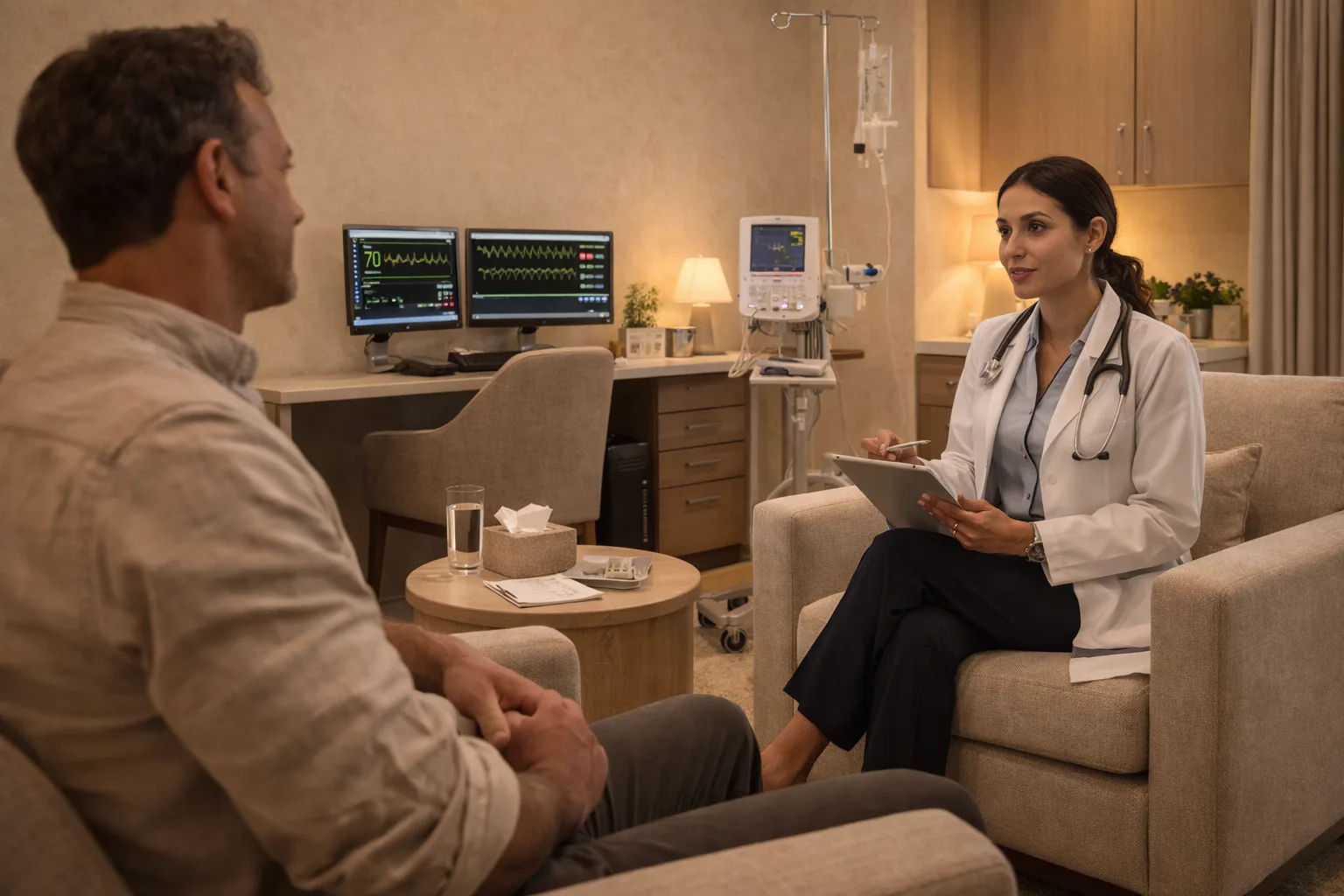
Roughly half of people with alcohol use disorder also live with a co-occurring mental health condition — whether depression, anxiety, PTSD, bipolar disorder, OCD, ADHD, or another diagnosis. When the underlying mental health condition is not addressed, the alcohol use almost always returns.
Bliss Recovery is built around the principle that you cannot heal one without the other. Our clinical team identifies and treats co-occurring conditions in parallel with your alcohol addiction treatment. Every client receives a full psychiatric assessment at intake, and treatment plans are designed with both diagnoses in view. Explore all of the co-occurring conditions we treat →
Mental Health We Treat Alongside This
Your First Week at Bliss
Reaching out is the hardest step. The first week of treatment is designed to make the rest of the journey feel possible.
Insurance and Payment

Cost should not be the reason anyone delays treatment. Bliss Recovery is in-network with HealthSmart, MultiPlan, PMCS, and TriWest, and works with most major commercial insurance carriers — including Blue Cross Blue Shield, Aetna, United Healthcare, Anthem Blue Cross, Optum, Cigna, Carelon, Magellan Health, and GEHA — on an out-of-network basis. Our admissions team verifies your benefits, walks you through what's covered, and answers questions about out-of-pocket costs before you commit to anything.
Under the Mental Health Parity and Addiction Equity Act, insurers are required to cover substance use disorder treatment at parity with physical health conditions. Many of our clients are surprised to learn how much of their treatment is covered.
Verify your insurance
Take 60 seconds to verify your insurance benefits before committing to anything.
Our Luxury Locations in Los Angeles
Bliss Recovery operates two private residential properties in the Hollywood Hills, both within minutes of Los Angeles's signature neighborhoods. Clinical research consistently links restorative environments to better treatment outcomes.

Spanish Villa Durand
2816 Durand Drive · Los Angeles, CA 90068
View Property
Lakeview Creston
2780 Creston Drive · Los Angeles, CA 90068
View PropertyWe serve clients across Hollywood, West Hollywood, Beverly Hills, Bel Air, Santa Monica, Pacific Palisades, Malibu, Pasadena, Sherman Oaks, Studio City, Encino, and the greater Los Angeles area. Phone: (323) 798-4411.
Why Choose Bliss Recovery for Alcohol Addiction Treatment
Integrated Dual Diagnosis Care
Most people with alcohol addiction also live with depression, anxiety, or trauma. We treat both diagnoses in parallel, not in sequence.
Private Hollywood Hills Setting
Two restorative residential homes on quiet hillside streets — the opposite of an institutional clinical environment.
Discreet and Confidential
Privacy is built into how we operate. From admissions to alumni, your story stays yours.
Executive & Professional Recovery
Programs designed for clients who cannot fully disconnect — with secure connectivity, executive scheduling support, and a discreet operational footprint.
Pet-Friendly Healing
Recovery is harder when you're separated from the things that ground you. Approved pets are welcome.
On-Site Executive Chef
Recovery is also nutritional. Daily meals prepared by our in-house chef, designed alongside our clinical team.
Four Pillars of Alcohol Addiction Care
Medical Detox and Stabilization
Alcohol withdrawal can be medically serious — including seizures and delirium tremens. Our clinical team provides 24/7 monitoring with evidence-based medications to manage withdrawal safely in a private residential setting.
Evidence-Based Therapy
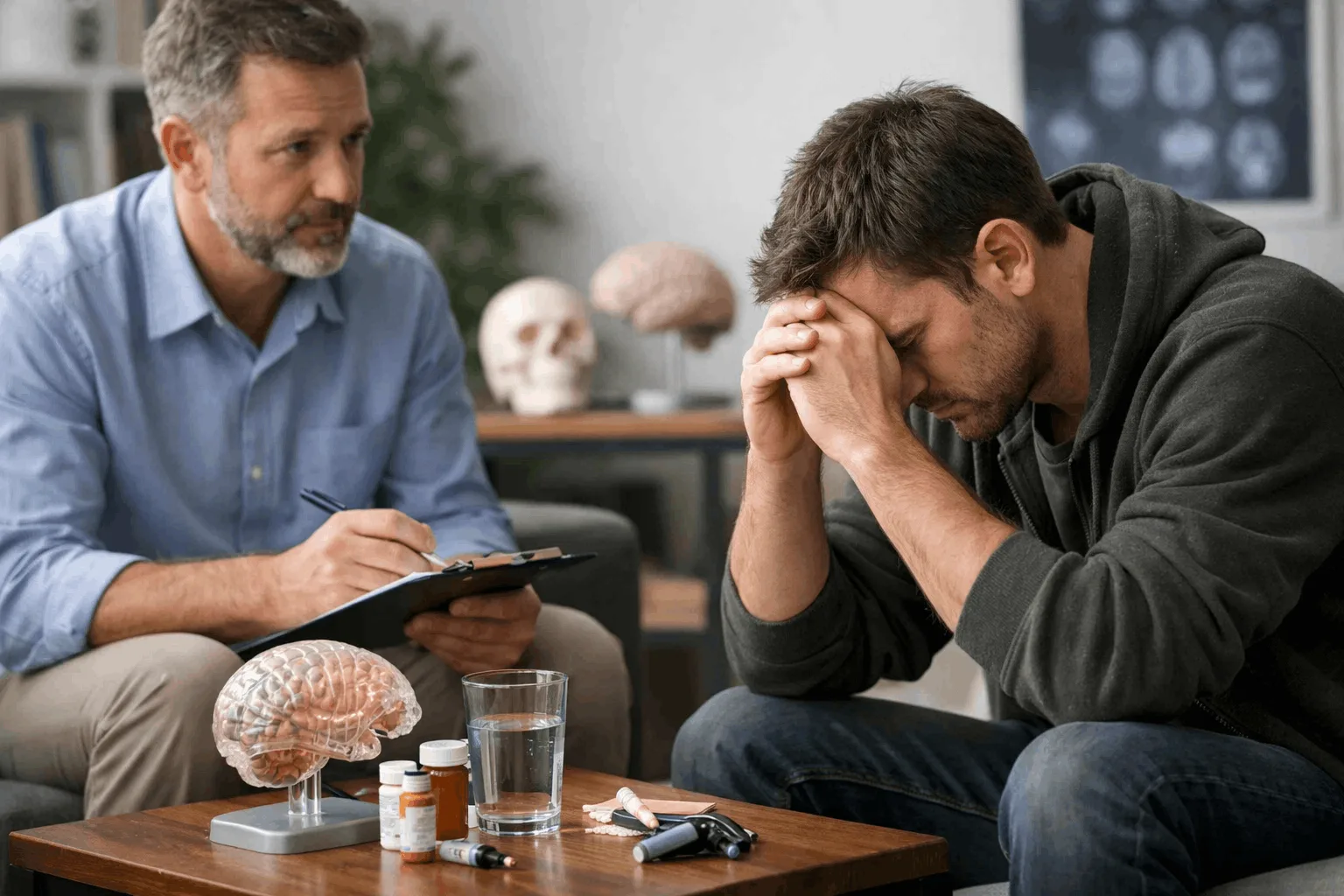
CBT, Motivational Interviewing, DBT, and EMDR are matched to each client's history and co-occurring conditions. Individual and group sessions run throughout treatment, addressing the psychological patterns that sustain drinking.

Integrated Dual Diagnosis Care
Alcohol addiction frequently co-occurs with depression, anxiety, PTSD, and bipolar disorder. We treat both the addiction and any underlying mental health condition simultaneously — because lasting recovery depends on it.

Aftercare and Long-Term Support
Recovery extends beyond discharge. Our step-down PHP/IOP programming and alumni community keep clients connected, accountable, and supported during the months and years that follow residential treatment.

Start Your Recovery from Alcohol Addiction Today
You don't have to face alcohol addiction alone. Our team of compassionate clinicians is available around the clock — confidentially, and without pressure — to guide you toward lasting recovery.
FAQ About Alcohol Addiction Treatment
How long does alcohol addiction treatment take?
There is no universal length. Treatment is sized to the severity of the addiction and the work each person needs to do. Medically supervised detox typically takes 5 to 10 days. Residential inpatient care runs for an individualized length based on clinical need. PHP and IOP step-down programming usually add another 4 to 12 weeks. We design the full continuum at intake and adjust as your needs evolve.
Does insurance cover alcohol addiction treatment at Bliss Recovery?
Yes. We're in-network with HealthSmart, MultiPlan, PMCS, and TriWest, and most major commercial insurance plans — Blue Cross Blue Shield, Aetna, United Healthcare, Anthem, Optum, Cigna, Carelon, Magellan, and others — cover some or all of our alcohol addiction treatment. Coverage depends on your specific plan, your level of care, and your length of stay. Our admissions team verifies your benefits in detail before you commit to anything.
Is alcohol withdrawal dangerous?
For heavy or long-term drinkers, yes. Severe alcohol withdrawal can include seizures and delirium tremens, a medical emergency that occurs in 5 to 15% of severe cases. This is why medically supervised detox — not at-home cold-turkey — is the safest first step for anyone with significant physical dependence on alcohol.
What medications are used in alcohol addiction treatment?
During detox, our physicians may use benzodiazepines, phenobarbital, clonidine, and other medications to manage withdrawal symptoms safely. After detox, three FDA-approved medications can support long-term recovery: naltrexone, acamprosate, and disulfiram. Your physician will determine which, if any, fit your treatment plan.
Do you treat alcohol addiction alongside depression, anxiety, or PTSD?
Yes, and we strongly encourage it. Treating only the addiction without addressing the underlying mental health condition almost always leads to relapse. Our integrated dual-diagnosis approach pairs alcohol addiction treatment with co-occurring mental health treatment in the same program, with the same clinical team.
Can I (or my loved one) keep working during treatment?
For clients in our PHP and IOP programs, yes. These levels of care are designed to integrate with work, family, and outside life. For clients in medically supervised detox or residential treatment, full disconnection is the standard, though we offer executive and professional recovery programming for clients with critical work responsibilities.
What makes Bliss different from other alcohol rehabs in Los Angeles?
Three things, mostly. Our integrated dual-diagnosis model treats the mental health side of addiction with the same seriousness as the alcohol use. Our private Hollywood Hills setting is small, residential, and intentionally non-institutional. And our clinical team builds individualized plans rather than running everyone through the same protocol.
Related Conditions & Programs
Come home to yourself.
A luxury alcohol and substance abuse rehabilitation facility in two adjacent Hollywood Hills residences — from medically supervised detox through aftercare and beyond.