.svg)
.svg)
.svg)
.svg)
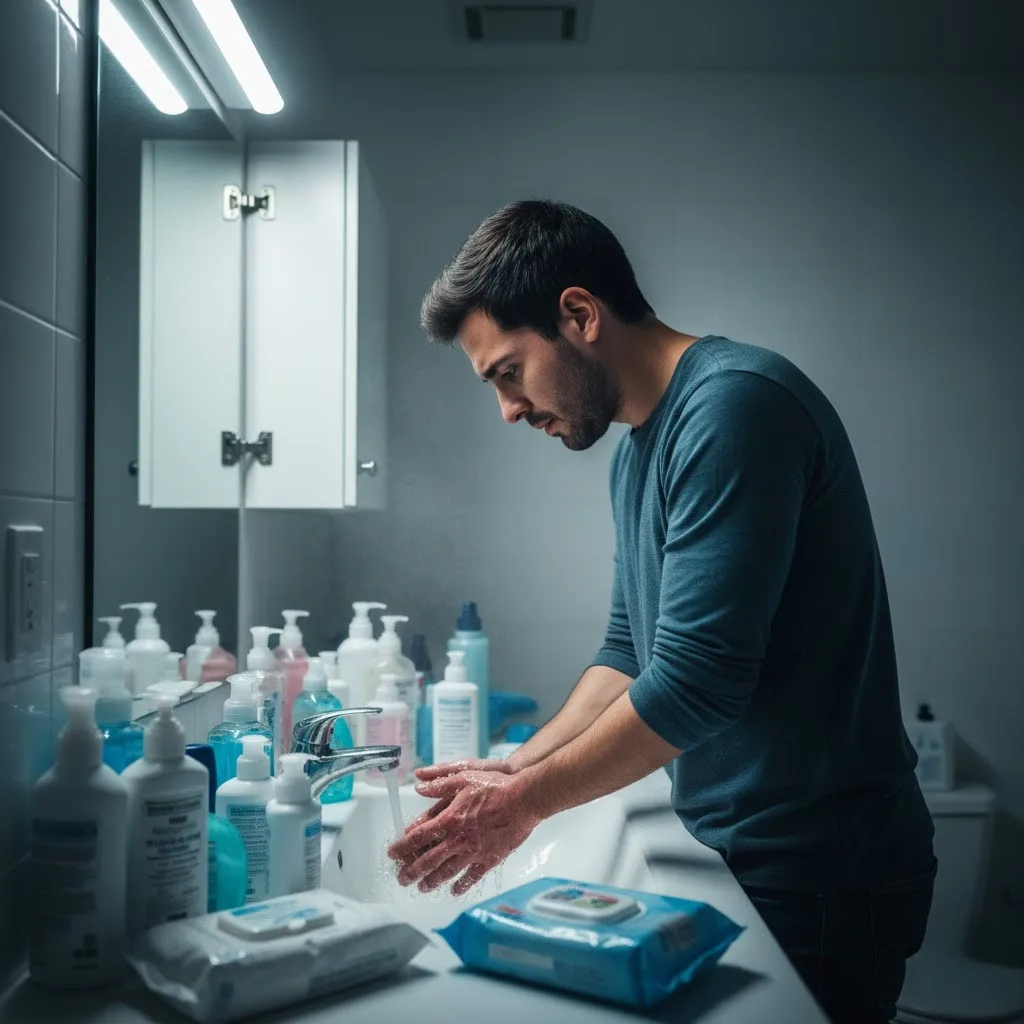
OCD & Addiction Treatment
Individualized, evidence-based care in a private Hollywood Hills setting. Same clinical team from intake through aftercare.

The Connection Between OCD and Addiction
OCD and substance use disorders are among the most commonly co-occurring conditions in clinical practice. Each condition tends to worsen the other — substances are frequently used to manage OCD symptoms, while sustained substance use worsens the underlying condition and makes recovery harder. OCD also frequently co-occurs alongside anxiety disorders and depression — overlapping conditions that share many of the same triggers and often need to be addressed within the same treatment plan.
Treating only the addiction without addressing OCD leaves the most powerful driver of substance use unaddressed. This is why integrated dual diagnosis treatment — treating both conditions simultaneously within a unified clinical plan — produces significantly better outcomes than treating either in isolation.
What Does Research Say About OCD & Addiction
Obsessive-Compulsive Disorder affects approximately 2.5 million adults in the United States, representing about 1.2 percent of the population, according to the National Institute of Mental Health (NIMH). Despite its prevalence, OCD is frequently misdiagnosed or undertreated — the International OCD Foundation reports an average delay of 14 to 17 years between symptom onset and effective treatment, a gap that substantially increases the likelihood of a co-occurring substance use disorder developing in the interim.
Research published in the Journal of Anxiety Disorders and data from the National Comorbidity Survey Replication indicate that approximately 25 to 30 percent of individuals with OCD also meet criteria for a lifetime substance use disorder. Studies from Yale University's OCD Research Clinic and the National Institute on Drug Abuse (NIDA) have documented that the obsessive-compulsive cycle — intrusive thought, anxiety spike, compulsive behavior — mirrors the craving-and-relief cycle of addiction at a neurobiological level, with both involving dysregulation of serotonin and dopamine circuits in the orbitofrontal cortex and basal ganglia.
Critically, substance use does not neutralize OCD — it temporarily suppresses symptoms before worsening them over time, a pattern confirmed by longitudinal research from the Substance Abuse and Mental Health Services Administration (SAMHSA). Evidence-based clinical guidelines from the American Psychiatric Association (APA) and Harvard Medical School recognize Exposure and Response Prevention (ERP) therapy, combined with high-dose SSRI pharmacotherapy, as the gold-standard treatment for OCD — and emerging research strongly supports delivering this care within an integrated dual-diagnosis framework that addresses substance use at the same time.
Symptoms and Presentation
Obsessions
Persistent, intrusive thoughts, images, or urges that cause significant distress and are temporarily relieved through substance use.
Compulsions
Repetitive behaviors performed to reduce anxiety from obsessions — substance use can become a compulsive ritual in itself.
The Cycle
Substances temporarily suppress OCD symptoms before worsening them over time, creating a self-reinforcing loop of dependence.
Substances temporarily suppress OCD symptoms before worsening them over time. They also complicate the clinical picture, making accurate OCD diagnosis more difficult.
Start your recovery
Our admissions team is available around the clock — confidentially, and without pressure.
How We Treat OCD and Addiction
ERP Therapy
Exposure and Response Prevention — the gold-standard treatment for OCD — conducted by clinicians trained in dual diagnosis contexts.
Medication Support
High-dose SSRIs that reduce obsessive intensity, combined with clinical monitoring to ensure they don't interact with substance use patterns.
Relapse-Specific Planning
OCD-specific relapse prevention that addresses both compulsive rituals and substance triggers as interconnected patterns.
"OCD demands certainty. Recovery demands acceptance. We teach both skills — side by side."
Addictions We Treat Alongside This
Four Pillars of OCD and Addiction Care

ERP Therapy
Exposure and Response Prevention — the gold-standard treatment for OCD — is delivered by clinicians trained in dual diagnosis contexts. ERP directly targets the obsessive-compulsive cycle that drives substance use as a coping mechanism.

Medication Support
High-dose SSRIs that reduce obsessive intensity are coordinated with addiction recovery goals. Clinical monitoring ensures medications support — rather than complicate — the overall treatment plan.

Integrated Dual Diagnosis Care
OCD demands certainty while substances provide temporary relief from obsessive distress. Our unified clinical plan addresses both the compulsive cycle and the addiction simultaneously — because one drives the other.

Relapse Prevention & Aftercare
OCD-specific relapse prevention addresses both compulsive rituals and substance triggers as interconnected patterns. Our step-down PHP/IOP programming and alumni community sustain the work done in residential treatment.

Start Your Recovery from OCD and Addiction Today
You don't have to face OCD and addiction alone. Our team of compassionate clinicians is available around the clock — confidentially, and without pressure — to guide you toward lasting recovery.
FAQ about OCD and Addiction
Does OCD get better with sobriety?
OCD symptoms frequently improve with sobriety. However, primary OCD is a distinct condition that requires its own treatment. Sobriety alone does not treat OCD.
How is ERP conducted in a residential setting?
ERP is conducted in individual therapy with a trained clinician who guides exposure exercises appropriate to the client's specific obsessional themes.
Why do OCD and substance use disorders frequently co-occur?
People with OCD often use substances to temporarily reduce the distress caused by obsessions and the urgency to perform compulsions. Alcohol and sedatives may blunt anxiety in the short term; stimulants can temporarily increase a sense of control. Over time, substance use typically worsens OCD symptoms and creates a compounding cycle. Treating only the addiction without addressing OCD almost always leads to relapse.
Does insurance cover OCD and addiction treatment at Bliss Recovery?
Yes. We're in-network with HealthSmart, MultiPlan, PMCS, and TriWest, and most major commercial PPO plans cover integrated dual-diagnosis treatment for OCD and co-occurring substance use disorder under the Mental Health Parity and Addiction Equity Act. Coverage depends on your specific plan and level of care. Our admissions team verifies your benefits in detail before you commit to anything.
How long does OCD and addiction treatment take?
Most clients begin with medically supervised detox (5 to 10 days), followed by residential treatment of an individualized length. ERP — the gold-standard therapy for OCD — requires consistent, structured practice over time to achieve meaningful results. PHP and IOP step-down programming typically add another 4 to 12 weeks of continuing clinical support.
What does OCD and addiction treatment look like at Bliss Recovery?
Treatment begins with a comprehensive psychiatric evaluation covering OCD symptom severity, substance use history, and any other co-occurring conditions. Our clinical team builds a unified treatment plan addressing both simultaneously. Individual therapy incorporates ERP for OCD alongside CBT for addiction; psychiatric medication management addresses OCD (SSRIs at therapeutic doses) with careful coordination to avoid medications that carry dependence risk. Before discharge, we build a structured aftercare plan.
Is residential treatment necessary for OCD and addiction, or can I do outpatient?
For clients managing OCD and active substance use simultaneously, residential treatment provides the immersive structure needed to begin ERP work safely — consistent clinical support, daily therapeutic programming, and removal from environmental stressors that trigger compulsive cycles. PHP and IOP are appropriate next steps once the client is stabilized and ERP is underway.
Related Conditions & Programs
Mental health and addiction treated together.
Co-occurring disorders reinforce each other. We treat both simultaneously — with psychiatric support, therapy, and medication management.